
 English
 Malay
Malay German
 French
 Turkey
 Arabic
 Português
 Netherlands
 Thai
Thai Italian
 Greek
Greek Spanish
 Danish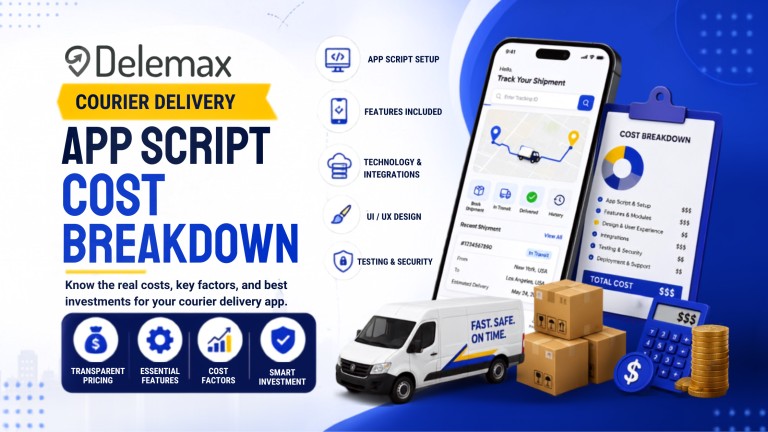
Courier Delivery App Script Cost Breakdown
Updated July 2026 · 10 min read · delemax.com
Introduction
Launching a delivery business in 2026 rarely means building everything from the ground up. Most founders now choose a courier delivery app script to get to market faster, spend less, and still get a fully functional, branded platform. But pricing in this space isn’t one size fits all, and costs can swing widely depending on what you actually need.
This breakdown walks through exactly what drives the price up or down, so you can budget realistically before you commit to a provider.
Why Costs Vary So Much for a Courier Delivery App Script
No two businesses need the same setup. A single city pickup and drop service costs far less than a multi vendor logistics marketplace with international shipping. The market itself reflects this complexity. According to Grand View Research, the courier, express, and parcel market is expanding rapidly worldwide, driven by e-commerce growth and rising demand for faster delivery windows. IBISWorld also notes that courier businesses are investing heavily in real-time tracking and premium delivery options to stay competitive, and that investment directly shapes what a script needs to include.
Here’s what typically influences your final price:
- Number of apps required (customer, delivery agent, vendor, admin)
- Level of branding and UI customization
- Native vs hybrid app development
- Third party integrations (maps, payment gateways, SMS/OTP)
- Multi language and multi currency support
- Post launch maintenance and support plans
Core Cost Components of a Courier Delivery App Script
1. Base License or Script Cost
This covers the core courier delivery clone script with standard features already built in. It’s usually the lowest cost component compared to customization.
2. Customization and Branding
Changing colors, logos, and layouts is cheap. Adding new workflows, custom modules, or unique business logic costs more, since it requires actual development work.
3. Native App Development
Native iOS and Android apps generally cost more than hybrid builds but offer better performance and smoother user experience, which matters for retention.
4. Third Party Integrations
- Payment gateways (Stripe, Razorpay, PayPal)
- Maps and navigation APIs
- SMS and OTP verification services
- Push notification services
Each integration adds a small cost but significantly improves usability.
5. Admin and Reporting Tools
Advanced analytics, commission tracking, and multi zone management typically cost more than basic dashboards, but they pay off quickly through better operational visibility.
6. Post Launch Support
Ongoing maintenance, bug fixes, and feature updates are usually billed separately, either as a one time fee or a recurring plan.
Courier Delivery App Script vs Custom Development Cost
Building a courier delivery app clone from scratch means paying for:
- Full UI/UX design from zero
- Backend architecture built entirely new
- Extensive QA and testing cycles
- Longer timelines, often 6 to 12 months
A pre-built parcel delivery script skips most of that. You’re paying primarily for customization and integrations, not the entire foundation, which is why white label solutions typically cost a fraction of custom builds while launching in weeks instead of months.
If you’re weighing this decision, it’s worth reading why choosing a courier delivery app script helps you lead the market faster than building everything in house.
Hidden Costs to Watch For
Founders often miss these when budgeting:
- Server hosting and scaling costs as order volume grows
- App store fees and periodic compliance updates
- Additional charges for adding new service zones or vehicle types
- Costs tied to scaling a parcel delivery script internationally, including currency and language support
Asking your provider for a transparent breakdown upfront avoids surprise bills later.
How Delemax Prices Its Courier Delivery App Script
Delemax structures pricing around actual business needs rather than a flat one size fits all rate. This means:
- Core script cost covers all four panels (customer, delivery agent, vendor, admin)
- Optional add ons for advanced features like geofencing and route optimization
- Transparent post launch support plans
- No hidden charges for standard integrations
Tips to Keep Costs Under Control
- Start with core features, add advanced modules later as you scale
- Choose hybrid development if native performance isn’t critical yet
- Bundle integrations upfront instead of adding them one by one
- Pick a provider offering clear post launch support pricing
- Review real feature sets before comparing prices, since cheaper doesn’t always mean better value
For a full look at what’s typically included at each price tier, this guide on scaling up your business with a delivery clone script breaks down the feature to cost relationship in more detail.
Final Thoughts
Pricing for a courier delivery app script depends heavily on customization, integrations, and the scale you’re planning for. Rather than chasing the lowest quote, it pays to compare what’s actually included, how well it scales, and what support looks like after launch.
If you want a clearer picture of what fits your budget, view a live demo of Delemax’s courier delivery platform or get a free consultation to map out a cost plan tailored to your business before you commit.
Frequently Asked Questions
1. What is the average cost of a courier delivery app script?
Costs vary widely based on features and customization, but white label scripts are generally far cheaper than building a platform from scratch.
2. Does a courier delivery app clone include native iOS and Android apps?
Most reputable providers, including Delemax, offer both native and hybrid options depending on your budget and performance needs.
3. Are there recurring costs after launching a courier delivery clone script?
Yes, expect ongoing costs for hosting, maintenance, and optional feature updates, usually billed monthly or annually.
4. Can I add new features to a parcel delivery script after launch?
Yes, most scripts are built to be modular, allowing you to add features like route optimization or multi currency support as you scale.
5. Is a white label courier delivery app script cheaper than custom development?
Generally yes, since you’re paying mainly for customization and integrations rather than building the entire platform from the ground up.
